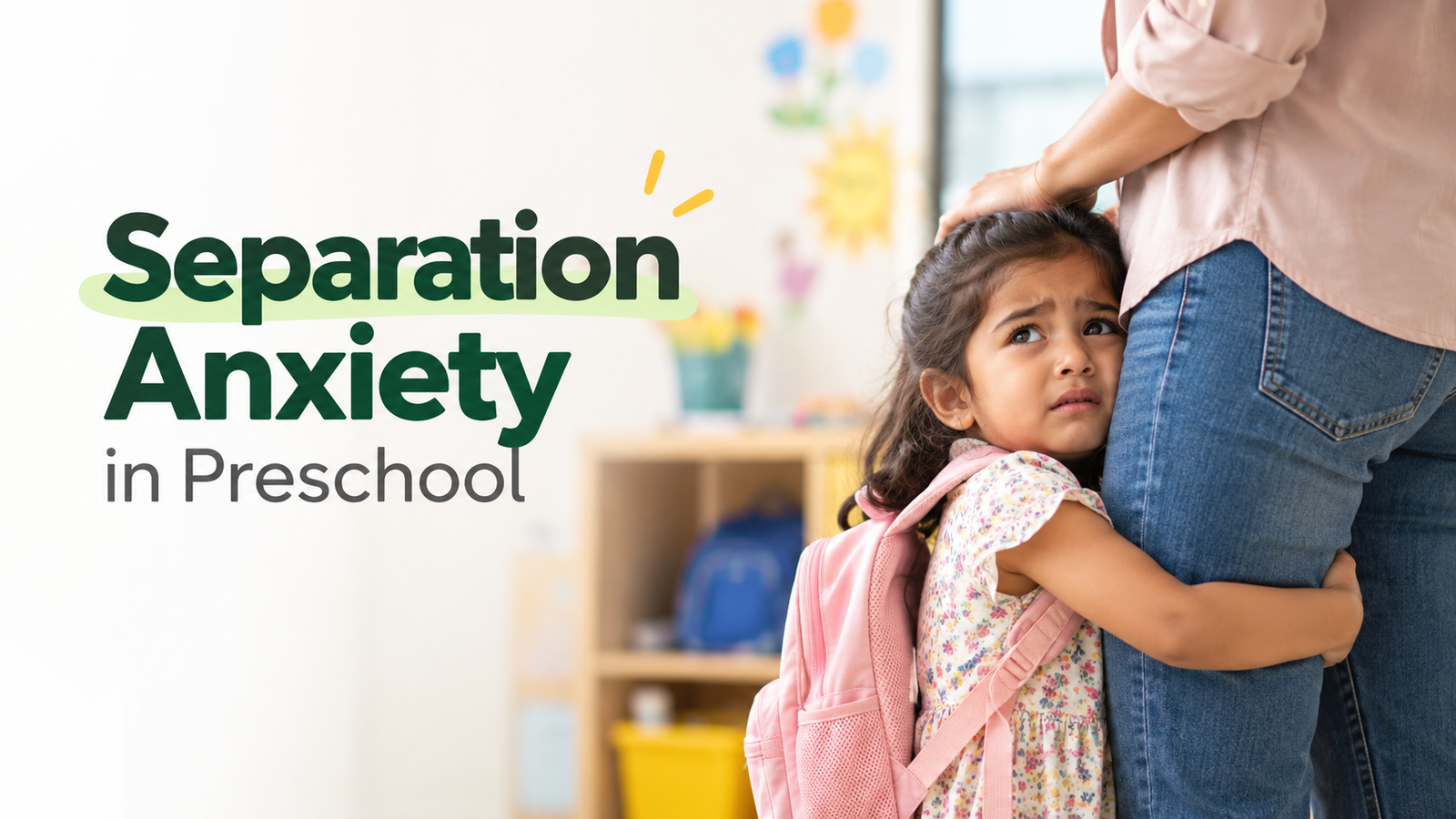
Starting preschool is a big step for a young child and for the whole family. It is very common for children to cry, cling or protest when a parent leaves, especially in the first few weeks. Separation anxiety in preschool is a normal stage of early development, not a sign that something is wrong. With the right preparation, a consistent routine and close communication with teachers, most children settle comfortably. This guide covers the common signs, how long the preschool adjustment period usually lasts, and practical preschool separation anxiety tips that make drop-offs easier.
What Is Separation Anxiety in Preschool?
Separation anxiety is the distress a child feels when they are apart from a parent or main caregiver. It is most common between the ages of about 18 months and four years, which is exactly when many children begin preschool.
At this age, children are still learning that a parent who leaves will always return. A new setting, with unfamiliar adults, children, sounds and routines, can feel overwhelming. Crying at the classroom door is the child’s way of expressing that this change feels big.
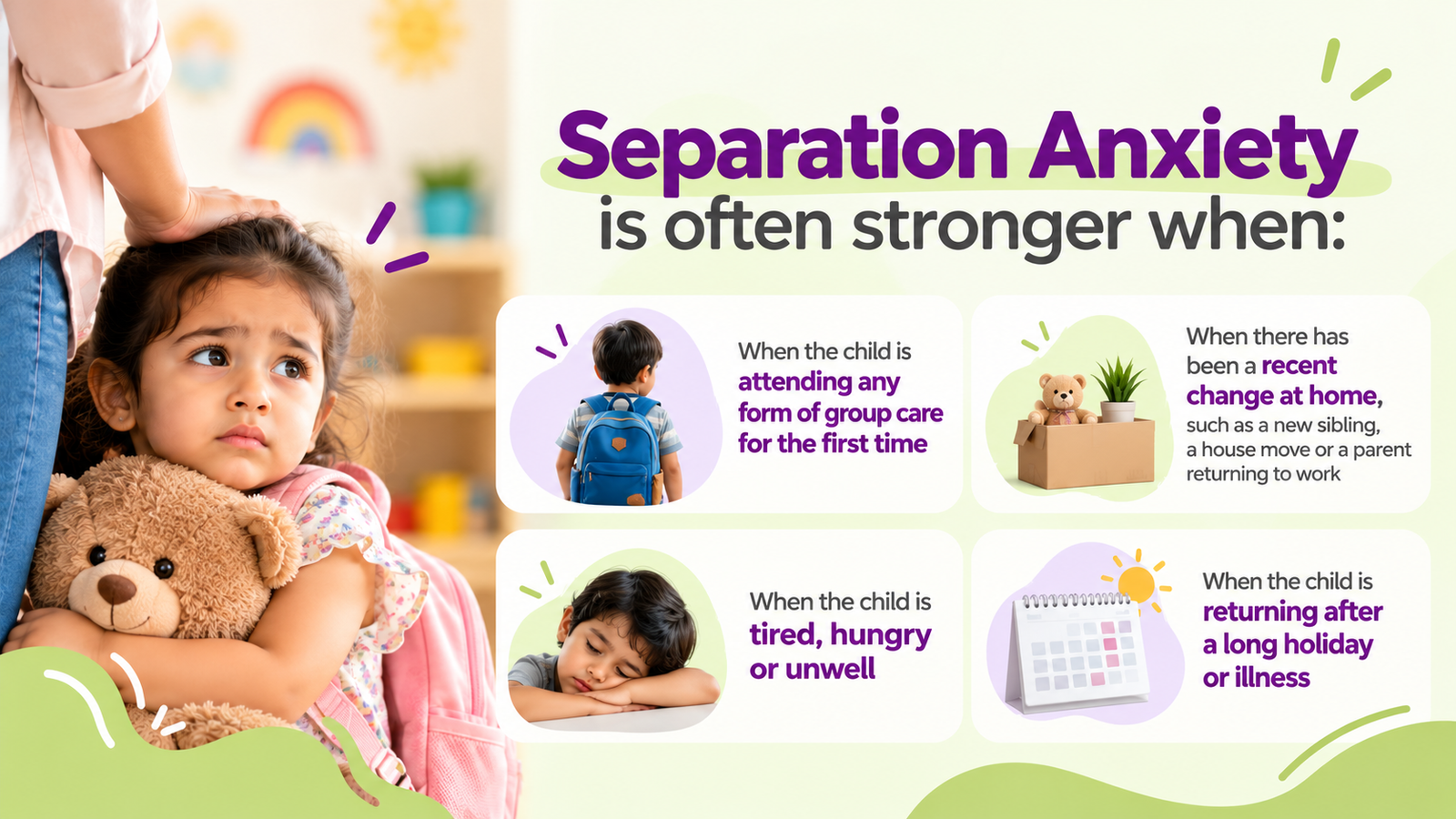
Separation anxiety is often stronger when:
- The child is attending any form of group care for the first time
- There has been a recent change at home, such as a new sibling, a house move or a parent returning to work
- The child is tired, hungry or unwell
- The child is returning after a long holiday or illness
Knowing these triggers helps parents respond calmly and plan ahead.
Signs of Separation Anxiety in Toddlers
The signs of separation anxiety in toddlers can appear at drop-off, during the school day or even at home. Common signs include:
- Crying, clinging or refusing to let go at drop-off
- Asking for the parent repeatedly during the day
- Difficulty eating, napping or joining activities at school
- Tummy aches or headaches on school mornings
- Increased clinginess, tantrums or sleep difficulties at home
- Temporary regression, such as asking to be carried or fed
Some children show no signs in the first week and then start to protest in the second or third week, once they realise preschool is now a regular routine. This delayed reaction is common and usually short-lived.
How Long Does Separation Anxiety Last?
For most children, the preschool adjustment period lasts between two and six weeks. Children who attend every day often settle faster than those who attend only two or three days a week, because the routine becomes familiar sooner. Very young children, or those who have had little time away from family, may need a little longer.
A child crying at preschool drop-off will usually calm down within five to ten minutes of the parent leaving. Teachers see this pattern every term, and many will share a quick update once the child has settled.
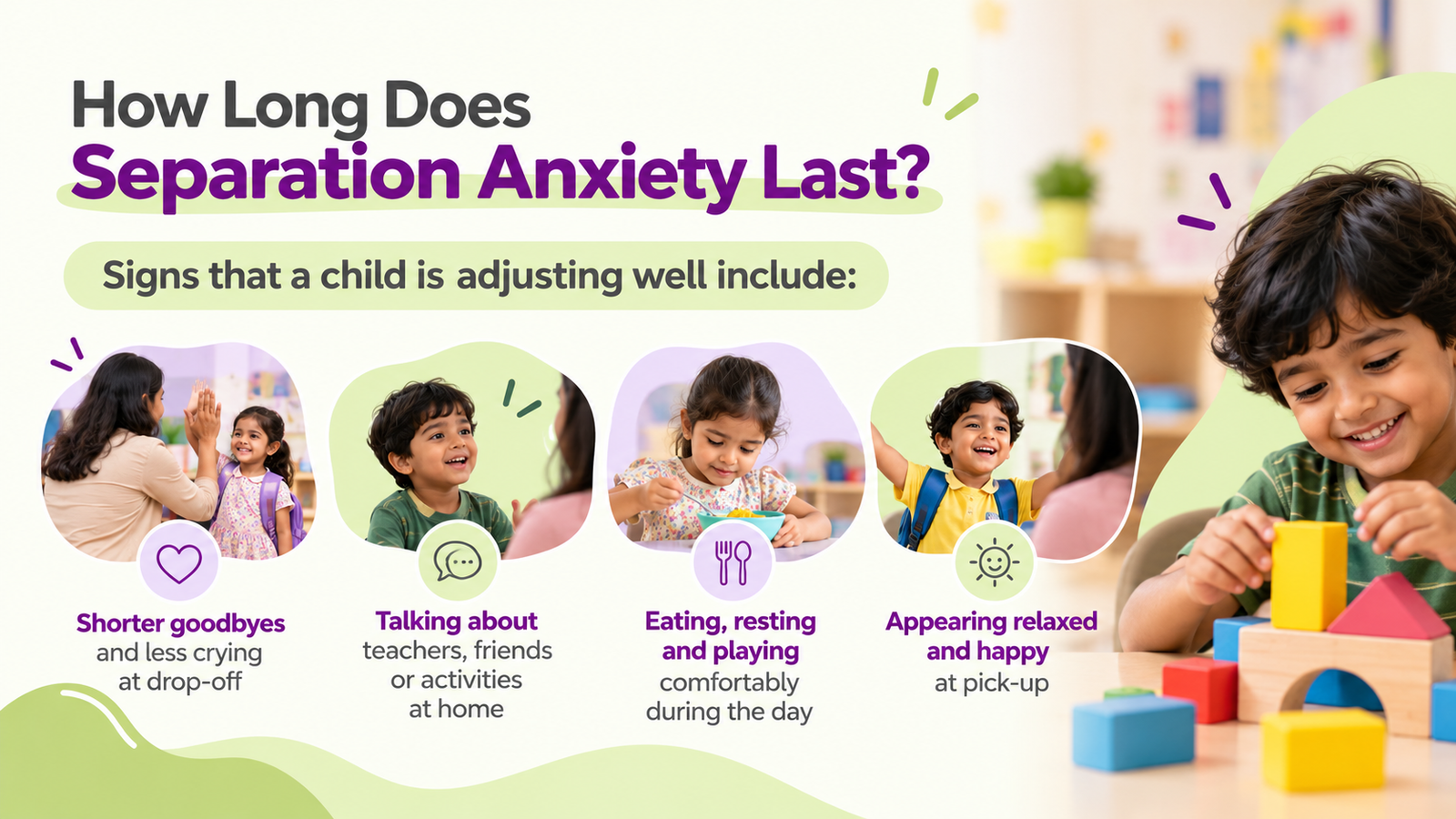
Signs that a child is adjusting well include:
- Shorter goodbyes and less crying at drop-off
- Talking about teachers, friends or activities at home
- Eating, resting and playing comfortably during the day
- Appearing relaxed and happy at pick-up
Progress is rarely a straight line. A good week may be followed by a difficult Monday, particularly after a weekend, holiday or illness. Consistency is what helps the progress stick.
How to Prepare a Toddler for Preschool
Knowing how to prepare a toddler for preschool can reduce anxiety before the first day arrives. Children cope better with change when they know what to expect.
Talk about preschool in simple, positive terms. Describe what happens there: playing, stories, songs, snack time and going home afterwards. Keep the tone light and confident.
Read picture books about starting school. Stories help children rehearse new experiences and give them words for their feelings.
Visit the preschool together. Seeing the classroom, play area and toilets, and meeting the teacher in advance, makes the setting feel familiar on day one.
Practise short separations. Short periods with a grandparent, relative or trusted caregiver teach a child that a parent always comes back.
Match routines to the school timetable. Shift wake-up, meal and nap times one to two weeks before preschool starts. A rested, well-fed child manages change far better.
Involve the child in getting ready. Choosing a water bottle or a lunchbox gives a sense of control and something to look forward to.
How to Say Goodbye at Preschool Drop-Off
Drop-off is usually the hardest part of the day. These first day of preschool tips can make goodbyes calmer and quicker.
Create a consistent goodbye ritual. A hug, a high five and a wave from the window, repeated every day, gives the child a predictable routine.
Keep the goodbye short and warm. Long goodbyes, returning for one more hug or waiting until the crying stops tend to prolong distress. Say goodbye confidently, hand over to the teacher and leave.
Do not slip away unnoticed. Sneaking out can increase anxiety, because the child learns that a parent might disappear without warning. Always say goodbye, even if it leads to tears.
Explain when you will return using the routine. Young children do not understand clock time. Linking pick-up to events, such as "after lunch and story time", is easier for them to follow.
Offer a comfort item if the school allows it. A small soft toy or a family photo can help a child feel connected to home.
Stay calm and positive. Children read adult body language closely. A relaxed face and a confident voice reassure them that preschool is safe.
Arrive on time at pick-up. Keeping the promise of returning when expected builds trust and makes the next drop-off easier.
After school, talk openly about feelings and focus on the positives. Questions such as "What did you play today?" or "What was your favourite part of the day?" keep conversations upbeat. Parents may also feel anxious or emotional during this time, and that is completely natural. Staying in regular contact with the teacher and trusting the routine helps both parent and child settle.
When to Worry About Separation Anxiety
Most separation anxiety in preschool eases within a few weeks. It is worth speaking to the teacher, and if needed a paediatrician or child development specialist, when:
- Intense distress continues beyond six to eight weeks with little improvement
- The child regularly refuses to eat, drink or use the toilet at school
- Anxiety is affecting sleep, appetite or behaviour at home as well as at school
- The child seems withdrawn, unusually quiet or fearful for long periods
- Physical complaints, such as stomach aches, occur most school mornings
Teachers can often suggest small adjustments, such as a gradual start, a shorter day for a short period or a special job to do on arrival. Working together usually resolves the issue quickly.
At Kayo International, the settling-in weeks are planned with gentle routines, familiar teachers greeting children each morning and regular updates for parents, so families feel supported from the first day.
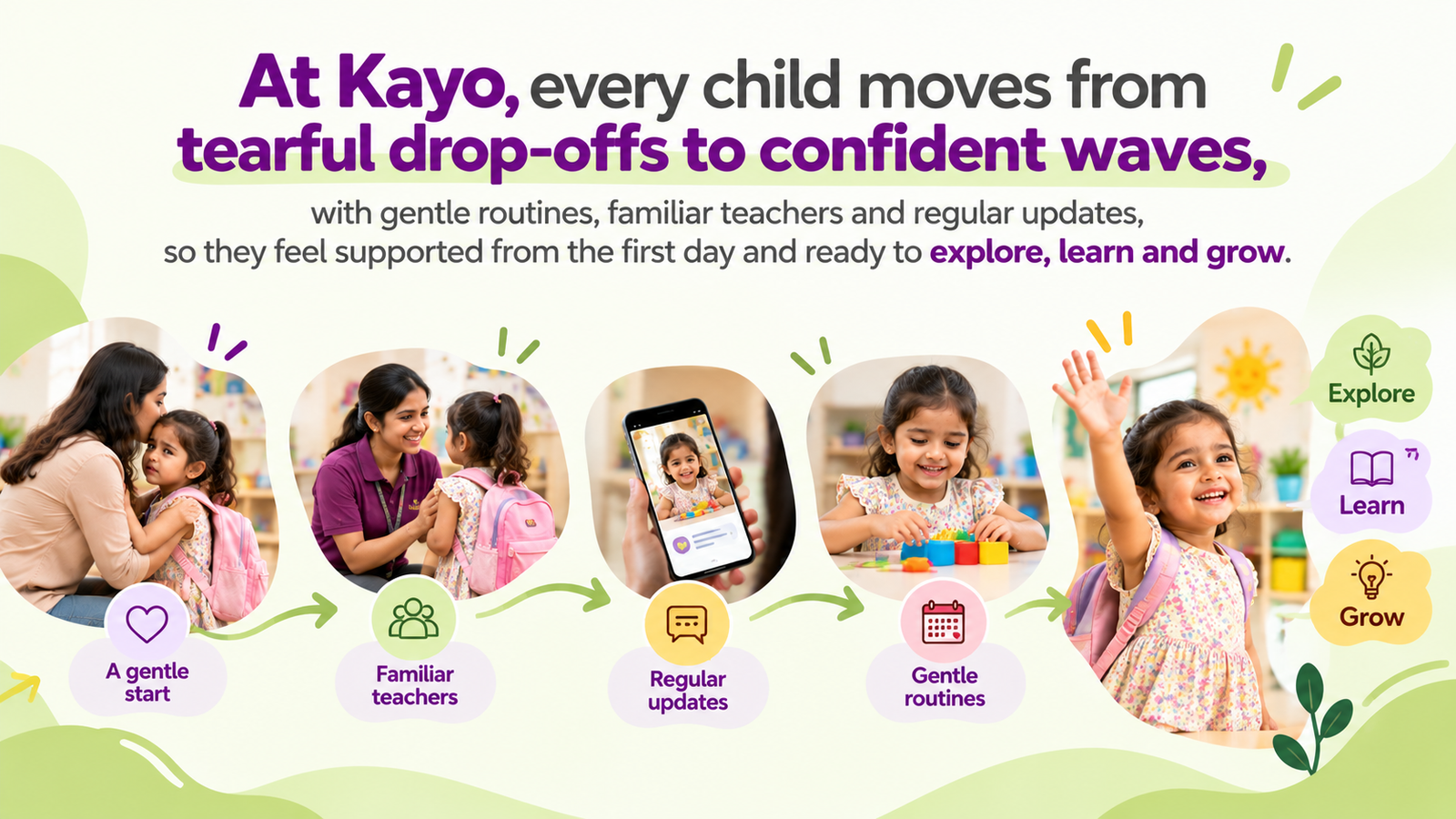
Separation anxiety in preschool is a normal, temporary phase. With preparation, a consistent goodbye routine and a strong partnership between home and school, most children move from tearful drop-offs to confident waves within a few weeks, ready to explore, learn and grow.


