If you have ever tried to put a phone away at bedtime, or watched two little ones wrestle over the same toy, you already know this: good habits for toddlers are not built in one perfect evening. They grow in ordinary moments, usually when you are tired and the sabzi is still on the stove.
You do not need a complicated system. A little consistency, a little warmth, and a few positive parenting tips practised at home can shape sleep, sharing and saying sorry.
Why Good Habits for Toddlers Form So Early
The toddler years are when children start to notice patterns: what happens after dinner, what you do when a friend snatches a block, how the house feels at bedtime. Those patterns become habits, long before a child can explain them in words.
This is also why toddler behaviour can feel so intense. A two-year-old is not being difficult when they refuse to share or stall bedtime. Their brain is still learning self-control, language and empathy.
Gentle parenting helps here. It does not mean saying yes to everything. It means guiding firmly, without shame, and remembering that a toddler is still practising being a person.
Sleep: A Toddler Bedtime Routine That Actually Works
Sleep is often the first habit parents want to fix, and the first to unravel. Work runs late, a favourite show is just five more minutes, and before you know it, your child is overtired, you are scrolling, and everyone is teary.
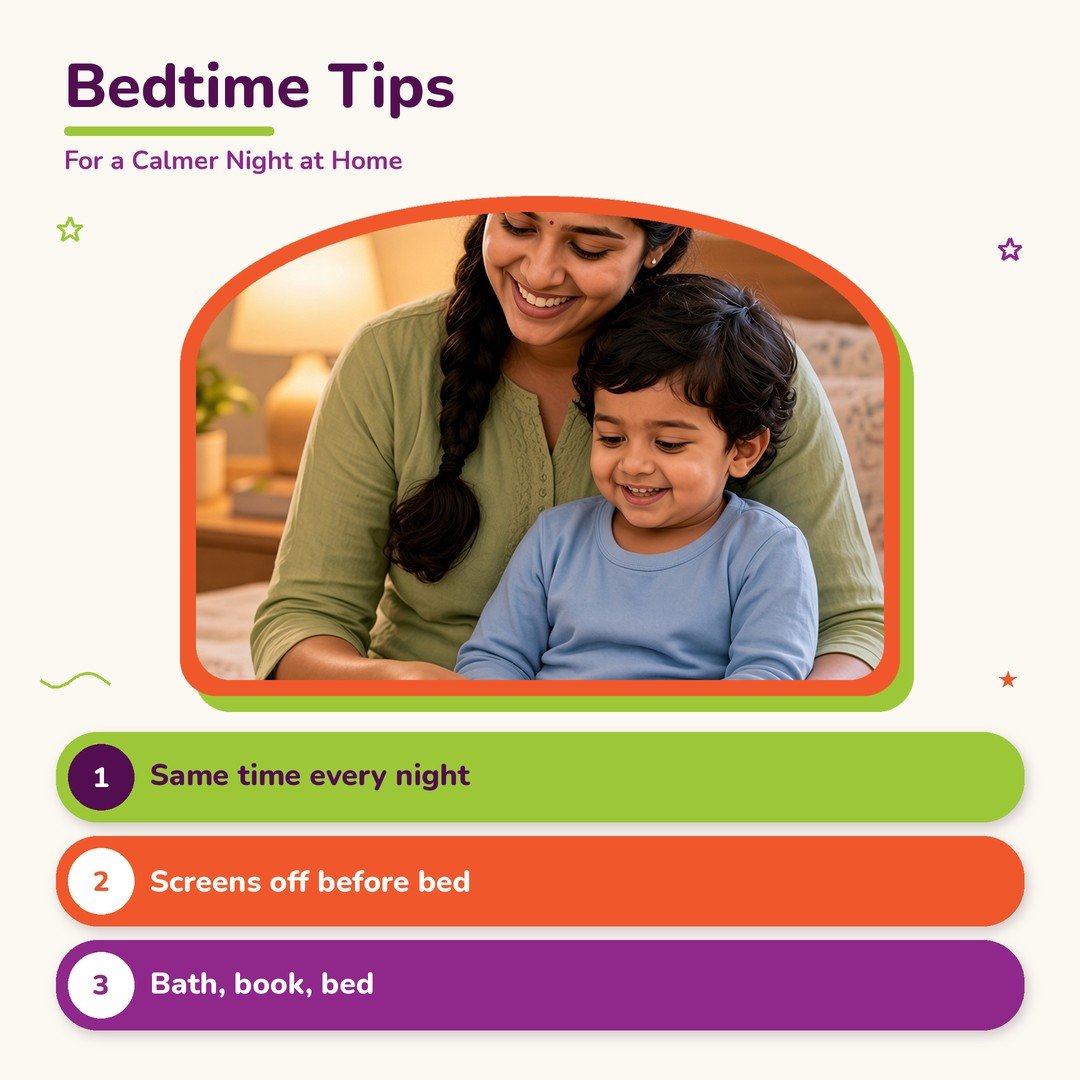
A simple toddler bedtime routine works better than a perfect one. Children feel safer when the evening follows the same gentle order, even if the clock is not exact.
Try a short sequence:
- Dinner, then a wash or a bath
- Dim the lights and put screens away
- One or two quiet books, or a soft song
- A short cuddle, the same goodnight words, and lights out
Many of us reach for the phone on the bed, just to clear messages. Your toddler notices. The glow and your turned-away face tell their body that the day is still going.
You can say, “This is our quiet time, so Amma’s phone is going to sleep too,” and put it on charge in another room. That often does more than a lecture about screens.
Aim for a similar bedtime window most evenings. When you are late, keep the same steps, just shorter. The routine is the comfort, not the perfect timing. If they call you back for water or another hug, stay calm, keep it brief, and return them to bed.
Teaching Toddlers to Share, Without the Daily Toy War
If sleep tests your patience at night, sharing tests it in the living room. Picture this: a cousin comes over, your child clamps down on a toy car, and within seconds there are tears, a tug, and a parent whispering, “Come on, you have to share.”
Teaching toddlers to share starts with understanding why they struggle. To a toddler, that toy is theirs, in their hands, right now. “You can have it later” does not feel real yet, so handing it over mid-play can feel like losing it forever.
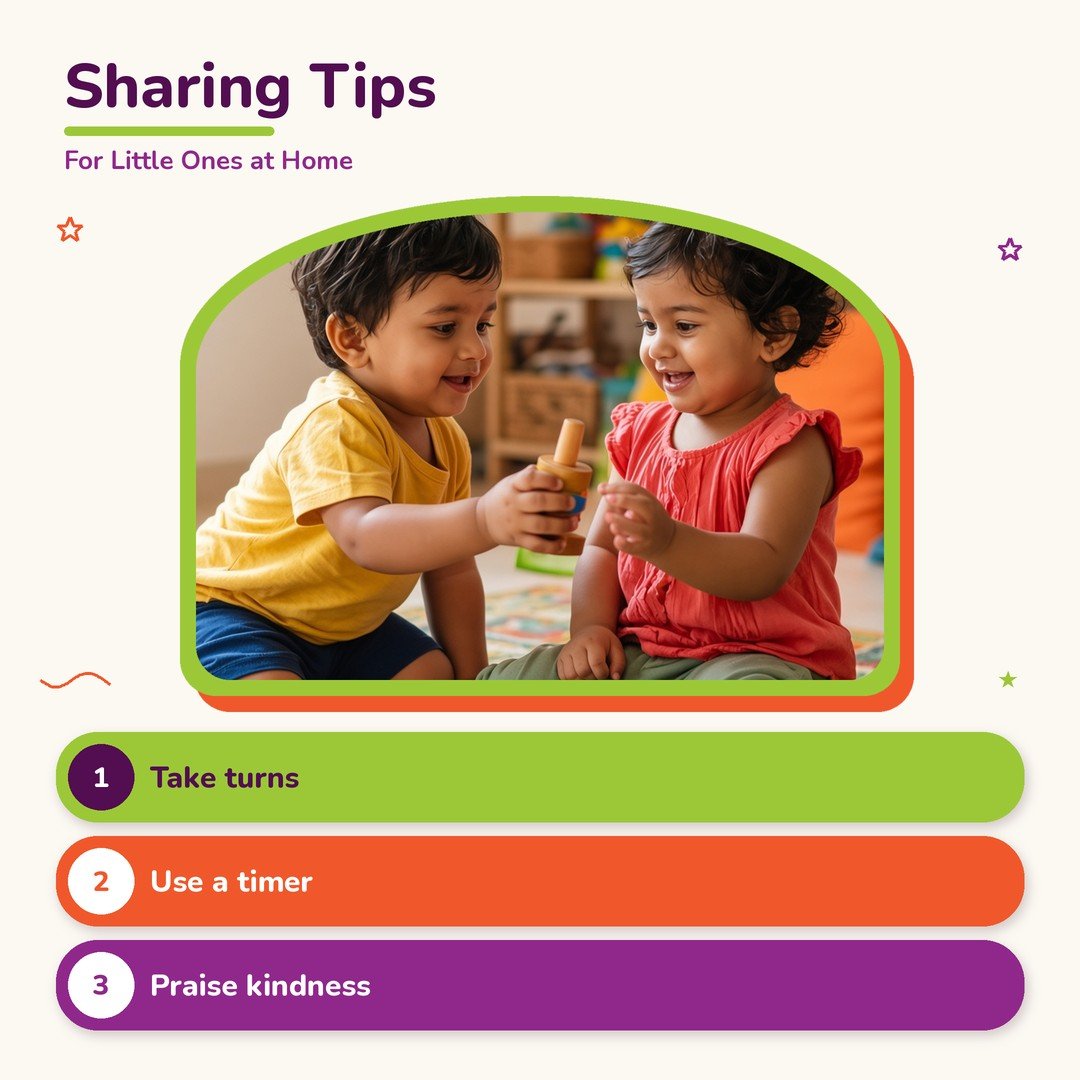
That does not mean you let grabbing win. Teach turn-taking instead, which is a skill they can actually practise.
A few gentle ways to start:
- Give language: “You are using it now. Ria can have a turn when the song ends.”
- Use a timer or a short song, so “your turn” has a clear ending
- Offer a similar toy, not as a bribe, but as a real choice
- Stay close during playdates. A calm adult nearby helps more than a speech about kindness
- Protect a few special toys. Not everything has to be shared
Model it yourself. When you share the last roti, say it out loud: “I am waiting for my turn.” Children copy what they see far more than what they are told. When they let someone else have a go, notice it: “You waited. That was kind.”
Sibling fights will still happen. Get down to their level, pause the toy, and help them reset the turn. You are looking for slightly longer waits and a child who is starting to trust that the toy will come back.
Saying Sorry: Teaching Empathy, Not a Forced Apology
“Say sorry.” Most of us still say it automatically when a child pushes, snatches or shouts. The problem is that a hurried sorry, spoken to please a grown-up, does not always teach anything. Sometimes it just becomes a ticket to go back to playing.
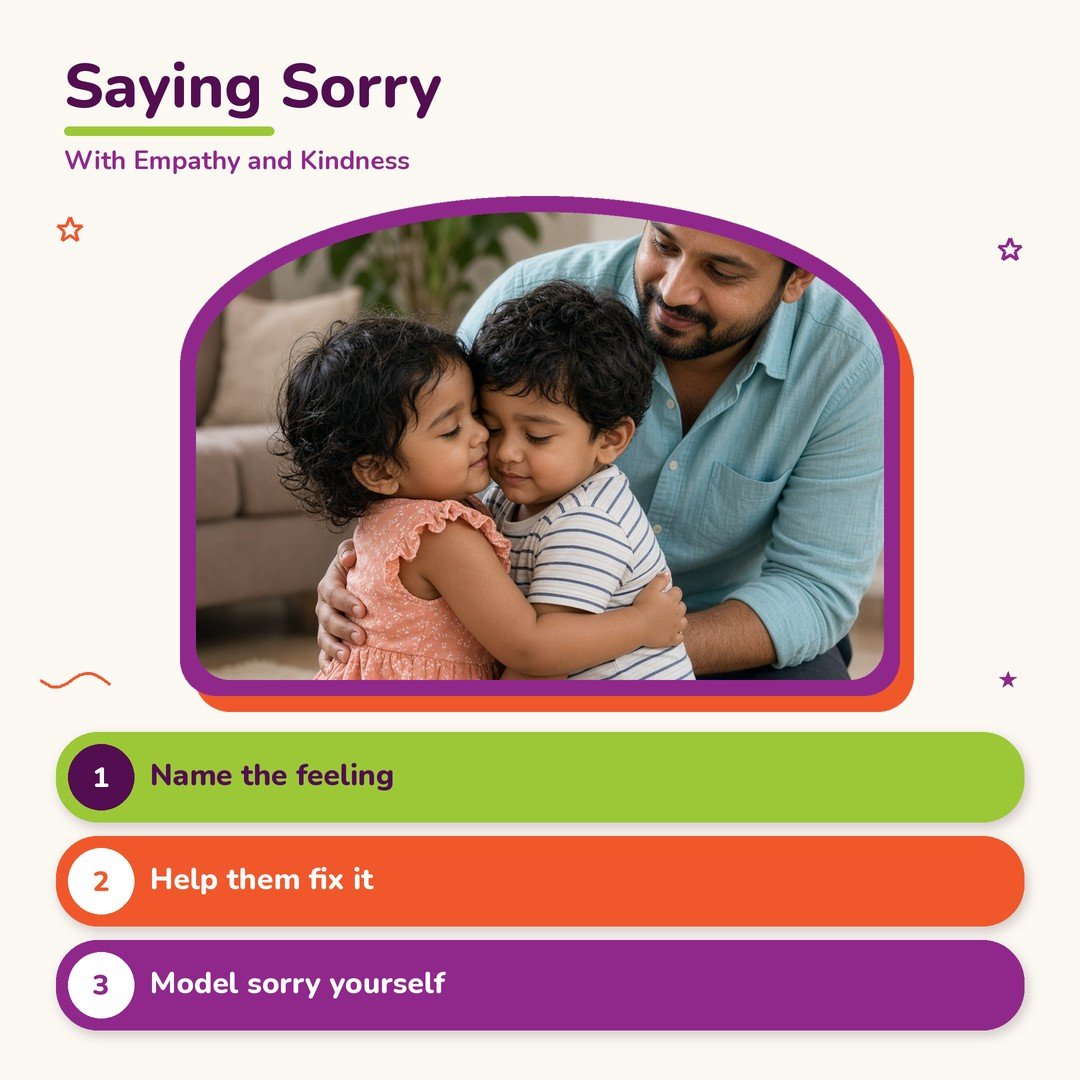
Gentle parenting looks at sorry differently. The goal is not a perfect little apology. The goal is empathy, and then repair.
After a shove at a playdate, try slowing the moment down:
- First, attend to the child who got hurt. “That looked sore. Are you okay?”
- Then turn to your child, without shame. “You pushed. Ayaan’s body didn’t like that.”
- Help them see the other child’s face. “Look, he is sad.”
- Offer a way to repair: a hug if it is welcome, a tissue, or handing the toy back
- If they are ready, they can say sorry. If not, you can model it: “I am sorry Ayaan got hurt. We will be more careful.”
This takes longer than a prompt to say sorry right now, but it sticks better. Your child learns that sorry is about the other person’s feelings, not about getting out of trouble. Some days they will refuse. Stay with the repair anyway.
You are not raising a child who performs politeness. You are raising a child who notices people.
Modelling Good Habits for Toddlers at Home
Toddlers are excellent scientists. They watch how you speak when you are late, whether you apologise after a sharp comment, and whether five more minutes on the phone actually ends.
If you want good habits for toddlers to take root, the home has to practise them too. That can feel like pressure on a weekday when both parents are working. So keep it human.
Model a bedtime by winding down yourself, even if you return to your laptop later. Model sharing by taking turns with a snack. Model sorry by saying, “I used a loud voice. I am sorry. Let me try that again.” Those sentences tell your child that grown-ups also practise.
If you need to send one message, say so: “I am sending this to Appa, then I am with you.” Children handle short, clear limits better than a parent who is only half present.
Praise, Patience and Consistency
Habits grow slowly. One good bedtime does not fix sleep. One shared toy does not mean the next playdate will be peaceful. Patience and consistency matter more than any single trick.
When you are building good habits for toddlers, progress is often quiet. A few positive parenting tips that help on ordinary days:
- Praise the effort, not just the outcome. “You tried to wait” is more useful than a generic “good boy” or “good girl”
- Keep limits short and kind. “The cars stay here. We can play with them after dinner.”
- Repeat the same language, so your child can predict you
- Work on one or two habits at a time. Sleep, sharing and sorry are enough
- Expect wobbles after travel, guests or illness, then return to familiar steps
Consistency does not mean rigidity. If a grandparent is visiting and bedtime slips, you can still keep the bath, the book and the same goodnight words. And be kind to yourself. You will snap, or reach for your phone at the wrong moment. Repair works for parents too. A simple “I was feeling rushed. Let us start again” keeps warmth alive in the house.
Quick FAQ: Good Habits for Toddlers
My toddler only falls asleep with a screen. How do I change this?
Move slowly. Shorten the show, then replace it with one familiar book or song in the same spot each night. Keep the rest of the toddler bedtime routine steady, and give it several days before you decide it is not working.
Is it okay if my child does not share yet?
Yes. Many toddlers are still learning that a toy can leave their hands and come back. Keep teaching toddlers to share through turn-taking, and protect a few special toys.
Should I force a sorry when my child has hurt someone?
A forced sorry rarely builds empathy. Help your child notice the other person, support a repair, and model the apology yourself if they are not ready.
A Small, Steady Start
You do not need a perfect household. You need a few rhythms you can repeat on ordinary Tuesdays: a gentle wind-down, a fair turn, a real repair after a hard moment.
Some evenings will be messy. That is still parenting. Tomorrow, you start the same small steps again. In the long run, those steps are what your child carries into preschool, into friendships, and into the way they treat people, including you.


