- November 5, 2026
- 12:42 pm
Some of the warmest moments in a child’s day happen with a book: a small voice asking for “one more page”, a finger pointing at a picture, a giggle at a funny sound. These moments do more than fill bedtime. They quietly build the listening, language and curiosity that strong early reading habits grow from.
The good news? You don’t need special materials or long hours. A few minutes a day, done with love and consistency, is enough to help your child fall in love with books. In this guide, we share simple reading tips for parents of children aged 1.5 to 6, so you can start building early reading habits at home today.
Why Early Reading Habits Matter
Reading readiness begins long before a child recognises letters. When toddlers hear stories, name pictures and chat about what they see, they build vocabulary, attention and an understanding of how stories work. This is the foundation of early literacy.
Most importantly, children learn that books are fun. That feeling is what turns a child who is read to into a child who loves to read, and it lasts well beyond the preschool years.
Build a Simple Daily Reading Routine
Children thrive on rhythm. A small, predictable reading time helps books become a natural part of the day.
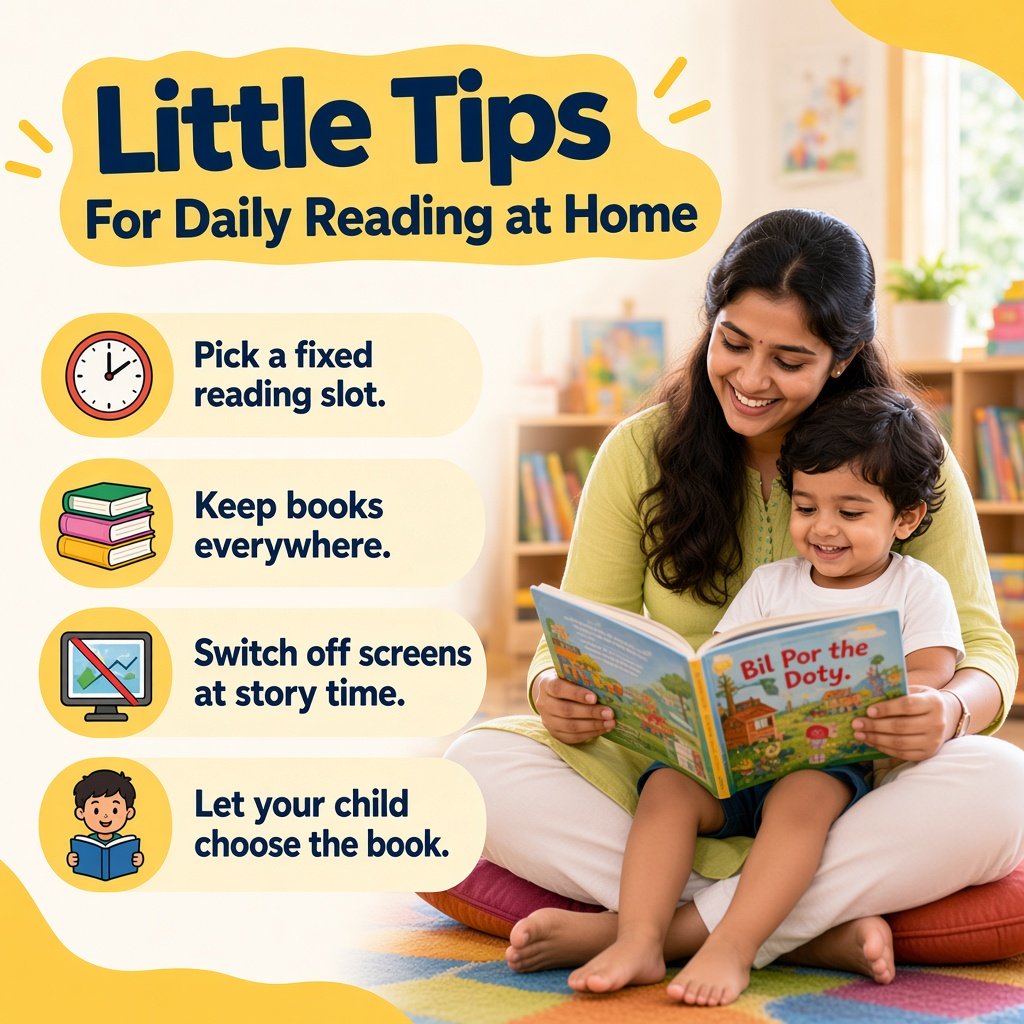
- Pick a fixed slot. Bedtime, after bath or right after school all work well. Ten to fifteen minutes is plenty.
- Keep books everywhere. A few in the car, the living room and the bedroom make reading easy to reach for.
- Switch off screens during story time so your child gets your full attention.
- Let your child choose. Reading the same favourite book again and again is perfectly normal and helps build confidence.
Create a Cosy Reading Corner
A special spot for books tells your child that reading is something to look forward to. It doesn’t need much space or money.
- Choose a quiet corner with good natural light or a soft lamp.
- Add a floor mat, a few cushions or a small bean bag so your child can sit comfortably.
- Use a low shelf or basket with books facing forward, so your child can see the covers and pick one on their own.
- Rotate books every week or two. A “new” set of old favourites keeps the corner exciting.
- Let your child help set it up. A drawing on the wall or a favourite soft toy as a “reading buddy” makes the space feel like theirs.
How to Choose Good Books for Little Ones
With so many books available, choosing can feel overwhelming. Keep these simple points in mind:
- Match the book to the age. Board books for toddlers, picture books for preschoolers, and slightly longer stories as your child grows.
- Look for bright, clear pictures that tell the story even without words.
- Pick books with rhyme, rhythm and repetition. Children love predicting what comes next.
- Include a mix: stories, simple facts about animals or vehicles, rhymes, and books about feelings and everyday life.
- Choose stories with familiar settings, like markets, festivals and family visits, so your child can connect them to their own world.
- Follow your child’s interests. A child who loves trucks or dinosaurs will happily sit for a book about them.
Read-Aloud Tips That Make Stories Come Alive
How you read matters as much as what you read. These read-aloud ideas turn a story into a shared adventure:
- Use voices and expressions. Go slow for the sleepy bear and loud for the roaring lion.
- Pause and ask questions. “What do you think will happen next?” or “How is the little girl feeling?”
- Point to the words as you read, so your child links spoken words to print.
- Connect stories to real life. “Remember when we saw a cow like this at Grandma’s village?”
- Stop while it’s still fun. Ending on a happy note makes your child want to come back tomorrow.
Age-Wise Ideas for Early Reading Habits at Home
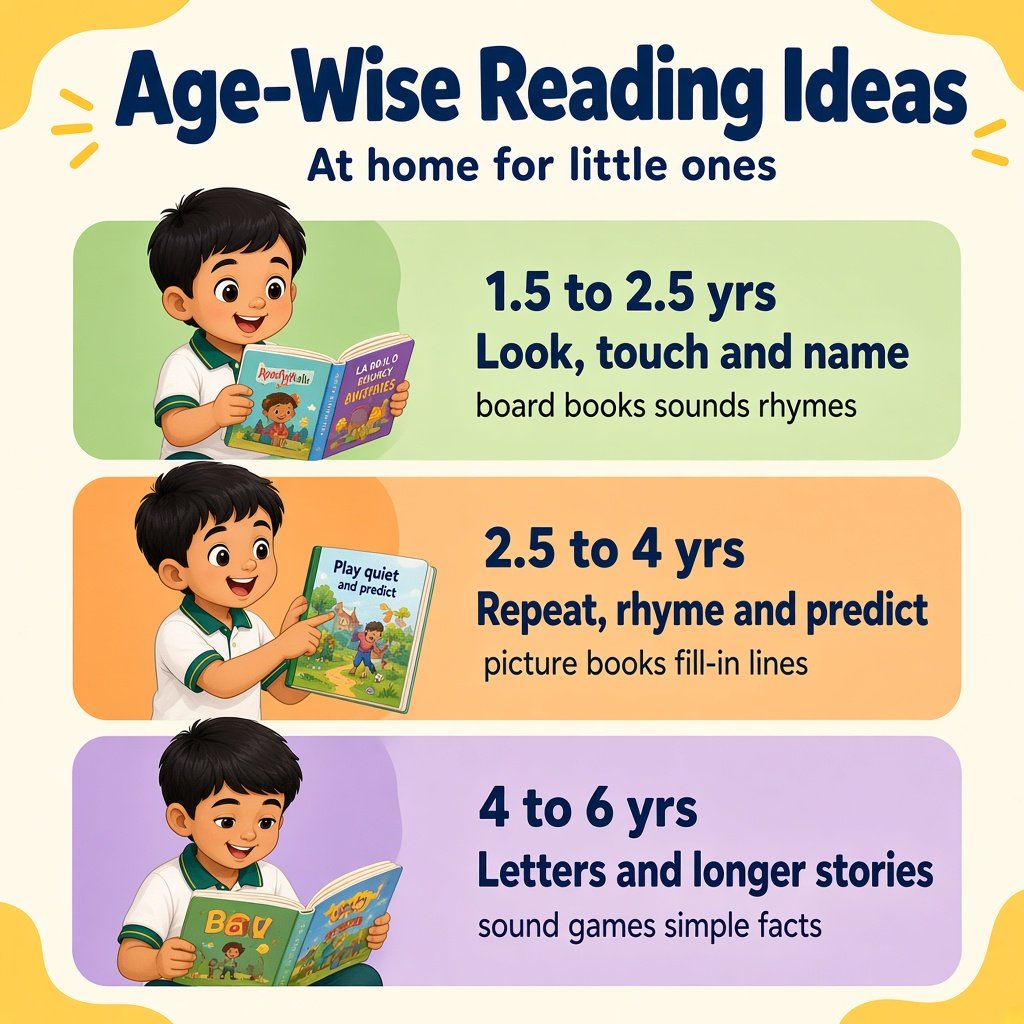
1.5 to 2.5 years: Look, touch and name
Choose sturdy board books with bright pictures, textures and flaps. Name objects, make animal sounds and sing nursery rhymes. At this age, chewing the corner of a book is part of exploring it!
2.5 to 4 years: Repeat, rhyme and predict
Picture books with repetition and rhyme are perfect. Let your child fill in the last word of a familiar line. Encourage them to “read” the pictures to you and retell the story in their own words.
4 to 6 years: Explore letters and longer stories
Introduce slightly longer stories and simple non-fiction about animals, space or vehicles. Play sound games (“What starts with the ‘b’ sound?”), spot letters on signboards and packets, and let your child try writing their name or a short note to a family member.
What If My Child Won’t Sit Still?
This is one of the most common worries parents share, and it is completely normal. Young children learn by moving, and their attention span grows slowly. A wriggly child can still be listening.
- Keep sessions short. Even three or four minutes counts.
- Let them move. Your child can act out the story, hold a toy, or turn the pages for you.
- Choose interactive books with flaps, textures, sounds or things to count and find.
- Read at calmer times, such as after a meal or before a nap, rather than when they are full of energy.
- Don’t force it. If today isn’t working, try again tomorrow. Pressure can make books feel like a chore.
Screen Time vs Books
Phones and tablets are part of modern family life, and it is understandable to rely on them sometimes. But screens and books offer very different experiences. A book read aloud invites conversation, questions and closeness with you. Many screen shows simply move on, whether or not your child understood.
A few balanced parenting tips can help:
- Keep screens away from bedtime and make a story the last activity of the day.
- If your child watches something, talk about it together afterwards, just as you would with a book.
- Offer a book in moments where a screen might be your first choice, like waiting at the doctor’s or on a short car ride.
- Model the habit. When your child sees you reading a book or newspaper, they learn that reading is something grown-ups enjoy too.
Reading in Tamil, English and Your Home Language
Many families in Chennai and Coimbatore speak Tamil, English and sometimes other languages at home. This is a wonderful strength. Hearing stories in more than one language enriches a child’s vocabulary and helps them enjoy both.
- Read in the language you are most comfortable with. Warmth and expression matter more than which language you use.
- Mix it up. Tamil stories at bedtime and English picture books in the afternoon work perfectly well.
- Share traditional tales, rhymes and songs from your childhood. Grandparents are often the best storytellers in the family.
- Translate as you go. If a book is in English, chat about the pictures in Tamil, or the other way around.
- Celebrate both languages and avoid comparing them. Every language your child hears supports early literacy.
Make Reading Part of Everyday Life
Reading isn’t only about books. Everyday moments are full of words waiting to be explored:
- Read signboards, menus and labels together while shopping or travelling.
- Make a simple shopping list with your child and let them “tick off” items.
- Visit a library or bookshop and let your child pick a book.
- Write a small note in your child’s lunch box and read it together later.
- Cook together and read a simple recipe aloud, step by step.
- Make up stories in the car or on a walk, and let your child add the next part.
These small, playful moments show your child that words are useful, interesting and all around them. Over time, they add up to confident early literacy, without ever feeling like a lesson.
How Kayo’s Nurture Lab Curriculum Supports Early Literacy
In class, our Nurture Lab curriculum blends Montessori, STEM and play-based preschool learning, aligned with the National Education Policy (NEP). Montessori materials help children explore letter sounds through touch, while stories, songs, role play and circle time build vocabulary and confidence. This way, the early reading habits you nurture at home are gently carried forward at school.
Small Steps, Big Love for Books
You don’t have to be a perfect storyteller. What your child will remember is your voice, your lap and the joy of turning pages together. Start small, stay consistent and celebrate every little reader moment. With patience and these simple reading tips for parents, early reading habits can become one of the happiest parts of your family’s day.


